In the world of waterfront development, standard straight-line walkways are the ultimate bottleneck. They restrict foot traffic, create high-density congestion at boat mooring points, and treat valuable over-water real estate as a simple utility path rather than an adaptable living area. While many property owners treat dock selection as a choice between fixed prefabricated sizes, the difference between "standard linear walkways" and "custom modular configurations" can be measured in usable square footage, structural stability, and long-term utility.
We sat down with the Pier of d'Nort engineering team to discuss the mechanics of modular frame load-bearing and why modern lakefront developments are moving toward drill-free accessory integration and custom footprint configurations.
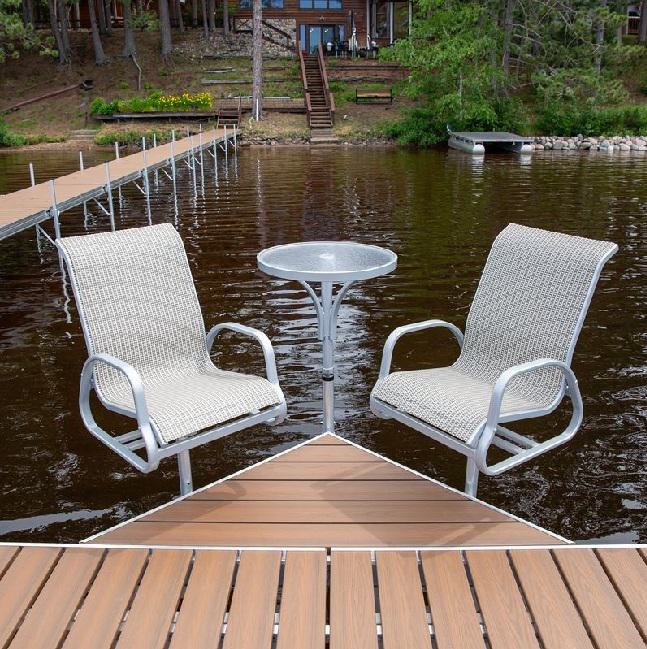
Why is Modular Framing Critical for Over-Water Real Estate?
At its core, custom pier engineering is a game of modular load distribution and footprint optimization. Traditional dock setups often force property owners to settle for rigid 4-foot-wide paths, forcing seating, watersport gear, and boat boarding into the same narrow corridor.
The engineering logic behind a modular aluminum frame system is much more flexible. By utilizing standardized interlocking frame dimensions (including 4x8, 6x6, and 2.5x8 sections), property owners can construct structural platforms, L-shapes, T-shapes, or U-shaped mooring slips tailored to specific shoreline geometries.
The Benefits of the Modular Footprint Approach:
- Custom Geometry Integration: standard sections connect to form wide over-water decks, creating dedicated zones for entertainment, fishing, and vessel docking without constricting foot traffic.
- Optimized Weight Distribution: Expansive platform sections disperse static load (patio furniture, multiple occupants) across additional leg assemblies, maintaining overall structural rigidity.
- Adaptable Structural Expansion: Interlocking frame joins allow property owners to extend overall pier length or add perpendicular finger piers as boating needs evolve over time.
- High Structural Yield: Lightweight marine-grade aluminum construction maximizes structural strength while keeping individual section weight low enough for single-operator adjustment.
How Do Gripper-Mounted Accessories Eliminate Structural Frame Wear?
Traditional dock modification presents a major engineering flaw: attaching cleats, bumpers, or seating requires drilling permanent holes through structural aluminum or wood decking. Drilling weakens frame integrity, creates points for corrosion, and permanently locks accessories into fixed locations.
The Continuous Dual-Dovetail Solution
Pier of d'Nort aluminum frames feature continuous, built-in side grooves along the perimeter extrusion. Accessories utilize specialized, heavy-duty clamp grippers that lock directly into the frame track without hardware penetration:
- Zero Frame Compromise: Accessories clamp securely using surface tension and track engagement, preserving 100% of the structural frame strength.
- On-Demand Repositioning: Loosening the mounting knob allows cleats, ladder mounts, umbrella holders, and boat bumpers to slide along the track or be removed in seconds.
- Dynamic Load Resistance: Heavy-duty folding cleats and bumper mounts utilize the full surface area of the frame extrusion to distribute pull force from moored boats.
Comparing Dock Architectural Systems
| Feature | Pier of d'Nort Modular System | Traditional Fixed / Built-In Docks |
| Footprint Flexibility | Fully modular (Straight, L, T, U, Platforms) | Rigid (Single linear width or fixed layout) |
| Accessory Attachment | Drill-free track grippers (Infinitely adjustable) | Permanent drilled bolts (Fixed location) |
| Lakebed Adaptability | Interchangeable footpads (Sand to deep muck) | Standard small footplates (Sinks in silt) |
| Structural Integrity | Marine-grade aluminum frame (Zero drill holes) | Weakened over time by drilled hardware holes |
| Reconfiguration Ease | Rapid top-side repositioning | Requires re-drilling and frame repair |
Troubleshooting Shoreline Stability: Is It Lakebed Silt or Frame Distortion?
When a dock section exhibits tilt or unlevel deck elevation after initial setup, owners often assume structural frame warping. However, the issue is almost always caused by uneven lakebed displacement or soft bottom silt.
How to Diagnose Shoreline Settlement:
- The Muck Settlement Test: If a single leg assembly continues to sink below the intended deck height, the lakebed bottom is soft silt or organic muck. Swap standard footpads for wide-surface "Giant Pads" to properly distribute downward weight over soft sediment.
- The Rock/Obstruction Test: If the frame tilts abruptly at a single corner despite firm lakebed conditions, a footpad is likely resting on an uneven rock or submerged debris. Disengage the leg cam, clear the footpad contact area, and re-level using top-side adjustments.
Engineering a custom waterfront isn't just about adding extra space; it's about maximizing functional utility while protecting long-term structural assets. By leveraging modular frame geometry, drill-free accessory tracks, and site-specific lakebed footpads, property owners can transform their shoreline into a high-performance, fully adaptable outdoor space.